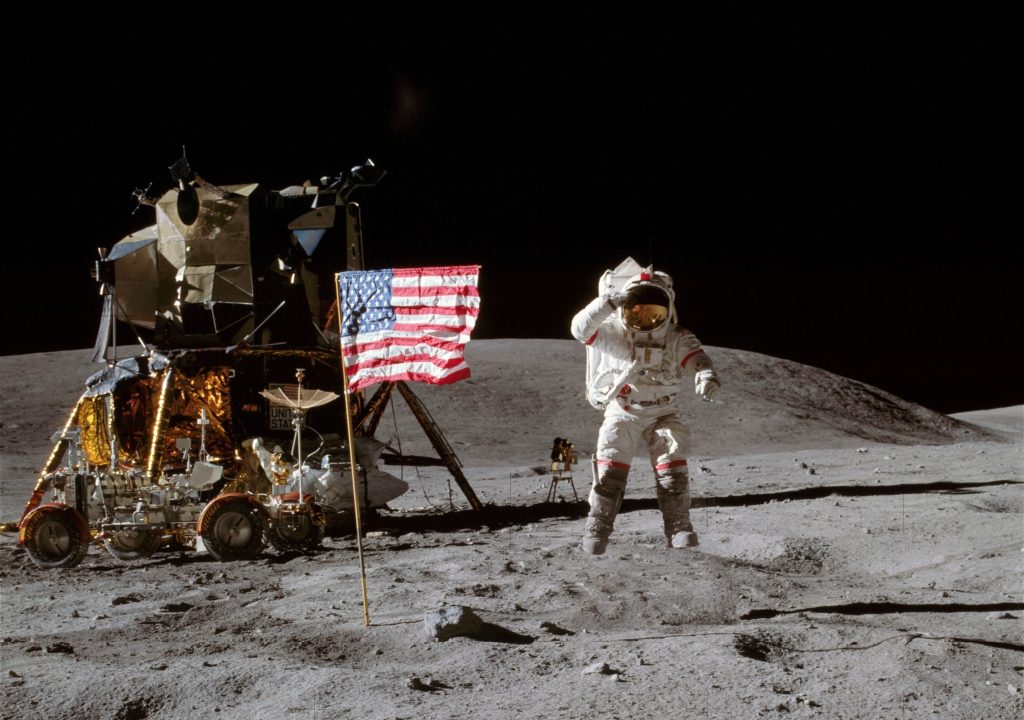
A lot of things happened in 1969, but not everything that mattered got broadcast on live television.
While the world was changing before our eyes, culture, technology, politics and day-to-day life were quietly evolving forever. Here are 10 incredible things that happened in 1969, the year our modern world was born.
The Apollo 11 moon landing

On July 20th, 1969, mankind took “one giant leap for mankind” when the lunar module “Eagle” touched down on the moon. Millions of viewers around the globe watched anxiously on their fuzzy black-and-white TVs as Neil Armstrong took his famous steps on the gray, dusty surface.
The moon landing didn’t just teach us about space; it unified the world by showing us how amazing humanity could be when we work together. We went from being residents of Earth to space travelers overnight.
The birth of the internet (ARPANET)

You may have heard that the internet was invented in the 1990s, but the two computers used to create the worldwide network actually exchanged the first “digital handshake” in October of 1969.
Computers at UCLA tried to send the message “LOGIN” to a research center hundreds of miles away. After successfully transmitting “L” and “O”, the system overloaded and crashed.
Although it would take three more decades to develop into what we know today, the Internet was born that day with the successful completion of “LO”.
The Woodstock music festival

In the summer of 1969, nearly half a million youth gathered on a muddy farm in New York for a three-day music festival called Woodstock. Ticket vendors lost control of the massive crowds and famously knocked down the fences, allowing everyone to camp out for free.
Music fans soaked in rainstorms danced for days, despite poor sanitation, little food, and massive traffic congestion. Festival goers enjoyed unprecedented “peace, love, and music” as iconic artists like Jimi Hendrix and Janis Joplin played for the crowd.
Sesame Street premieres on TV

Kids everywhere got a new friend on November 10th, 1969. That’s the day Sesame Street made its debut on television. Before Sesame Street, children’s programming was limited to cartoons or simplistic storytelling.
Street was different, educational, and was also the first time that children were introduced to such a diverse mix of races and cultures living harmoniously on one TV show. Friendly puppets like Big Bird and Oscar the Grouch taught kids across America how to read, count, and behave using playful activities.
The first Concorde Supersonic flight

Imagine crossing the Atlantic Ocean twice as fast as the speed of sound. That became a reality to everyday people when the Concorde took its first flight in March of 1969.
With Concorde, you could fly from London to New York City in less than 4 hours (half the time of today’s modern flight). Resembling a giant metallic bird, Concorde featured an adjustable “droop nose” and skinnyJT-shaped wings.
The Beatles’ rooftop concert

On a cold January day in 1969, The Beatles took the stage for the final time. The entire world knew that the rock-n-roll band was splitting up, but no one expected their finale to take place on the rooftop of their own London office building.
The impromptu concert caused office workers to look up from their desks to see four of the biggest music stars in history playing together one last time. Although The Beatles would only play for another 40 minutes before being shut down by police, the historical performance remains one of the most incredible moments in rock-n-roll history.
The first artificial heart

In April 1969, Dr. Denton Cooley changed cardiac history when he installed the first all-mechanical heart inside a human patient. While the patient only survived 64 hours with the metal heart, it kept him alive long enough to receive a transplant.
Never before had a non-biological device successfully taken on the responsibilities of a human organ. It gave hope to millions of heart patients and paved the way for mechanical hearts that we still use to save lives today.
The Boeing 747 “Jumbo Jet”

In the 1960s, airplanes were only for the super wealthy. Planes could only seat a few dozen people at a time, and ticket prices were high.
All of that changed when Boeing invented the 747 Jet, aka “The Jumbo Jet”. When it debuted in February of 1969, it was so big that it was the very first airplane to have two aisles and two stories.
Taking advantage of its massive seating capacity, airlines were finally able to reduce airfare costs. Suddenly, air travel wasn’t something just for the rich and famous. It lets everyday families take trips to other countries for the first time.
The Cuyahoga River fire

The Cuyahoga River in Ohio caught fire in June of 1969. It was heavily polluted by coal and oil plants upstream. So much industrial waste was dumped into the river that it was literally ON FIRE in 1969.
Although it’s embarrassing to think about, the burning river water was one of the biggest reasons we have environmental protections today. Photos of flames licking the surface of the river prompted Congress to pass laws regulating water and air pollution.
The first ATM is installed

Before 1969, if you wanted cash from your bank, you were limited to the hours it was open. If your local bank closed at 3 pm, you didn’t get cash after that time.
Want to take your kids out on Saturday night? Too bad if your bank was closed. All of that changed when the first ATM was installed at a bank in New York.
Customers were skeptical about interacting with a robot at first, but ATM’s allowed people to bank whenever they wanted. Soon, everyone expected to “have it now,” whether it was information, food, or money.
The following sources were consulted in the preparation of this article:
- Charley Kline Sends the First Message Over the ARPANET from Leonard Kleinrock’s Computer
- 30 January, 1969 – The Beatles Play Their Legendary Rooftop Gig
- 50th Anniversary of the World’s First Total Artificial Heart
- Cuyahoga River Fire: The Blaze That Started a National Discussion
- The Moon Landing
- A Year in History: Timeline of 1969 Events

