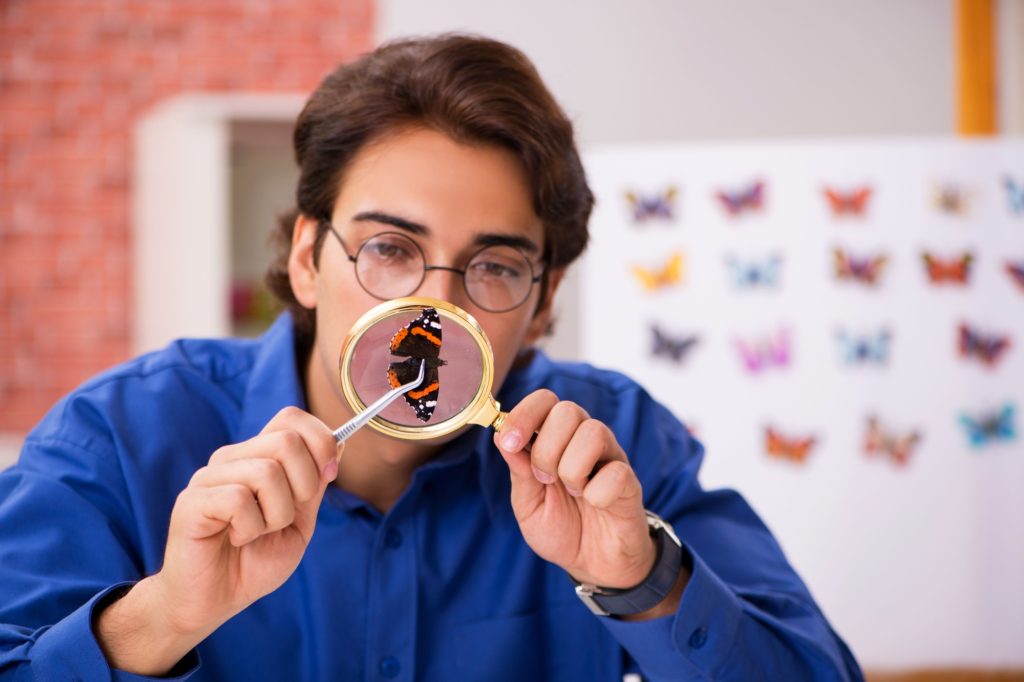
Insects are everywhere. Surprisingly enough, they have some incredible tricks up their sleeves, including chemical sprays hotter than your morning coffee. These creatures are full of surprises. Here are eight remarkable facts about insects, all backed by science (see the end). Which of these bugs surprised you the most?
Featured Image Credit: Shutterstock.
Fire ants link bodies to build waterproof rafts
Fire ants quite literally hold their legs & jaws together with other ants to stay above water. They do this when floods come along. These creatures snap together like LEGO pieces, with enough trapped air to keep the whole colony afloat for days. That’s pretty amazing teamwork. And especially for bugs that usually just bite.
Periodical cicadas run on prime-number schedules
You wouldn’t think that cicadas care about math, but they do. Some cicadas stay underground for thirteen years, or sometimes seventeen. They’ll then crawl up to the surface. Scientists say the odd-number cycles help them avoid predators’ rhythms. And honestly, waiting that long for a few weeks of flying sounds rather wonderful for an insect.
Honeybees map directions with a dance
You might’ve seen bees doing figure-eight moves inside their hives. That’s not just random buzzing around. They’re creating a map to tell other bees where the food is compared to the sun. The wider the angle of the dance, the farther away it is. Essentially, they’re showing off their bee GPS, just without Wi-Fi.
A tiger moth can jam a bat’s echolocation
Tiger moths have the remarkable ability to click away at high speed. This throws off a bat’s echolocation completely. In fact, it’s so strong that the bat’s attack often fails because it simply can’t get a read on where the moth is. Scientists muted the moths during an experiment & the bats started catching them again.
Glasswing butterfly wings cut glare with nano-pillars
Glasswing butterflies look almost invisible in flight, and that’s thanks to their wings that act like natural anti-reflective glass. They have tiny, uneven pillars on the wing surface. These pillars scatter light in all directions, which is quite different from smooth glass. Their wings allow you to see straight through without any glare.
Treehoppers talk by vibrating plants
Instead of chirping like crickets, treehoppers prefer to send messages through plant stems. They create low vibrations that go along the leaves & stalks. Other insects pick it up with their legs, meaning that they’re quite literally talking through plants. How amazing is that?
Cockroaches have an ultra-fast escape circuit
Anyone who’s ever tried to sneak up on a roach will know it’s nearly impossible. This is because they have little hairs on their back end that sense the tiniest puffs of air, sending a lightning-fast signal straight to their legs. They’ve already picked a direction & bolted within a fraction of a second. No wonder they’re so hard to catch.
Dragonflies can see in almost every direction
A dragonfly’s eyes cover nearly its whole head. As such, it can spot movement from the front, back & sides without needing to twist around. But that’s not all. Each compound eye holds around 30,000 tiny lenses, which gives them quite an edge. They notice changes almost instantly from any prey they’re chasing in the air.
The following sources were consulted in the preparation of this article:
- Fire ants self-assemble into waterproof rafts to survive floods
- Independent divergence of 13- and 17-y life cycles among three periodical cicada lineages
- The flight paths of honeybees recruited by the waggle dance
- Tiger Moth Jams Bat Sonar
- The role of random nanostructures for the omnidirectional anti-reflection properties of the glasswing butterfly
- The Behavioral Ecology of Insect Vibrational Communication
- Responses of Giant Interneurons of the Cockroach Periplaneta americana to Wind Puffs of Different Directions and Velocities
- Visual Acuity in Insects