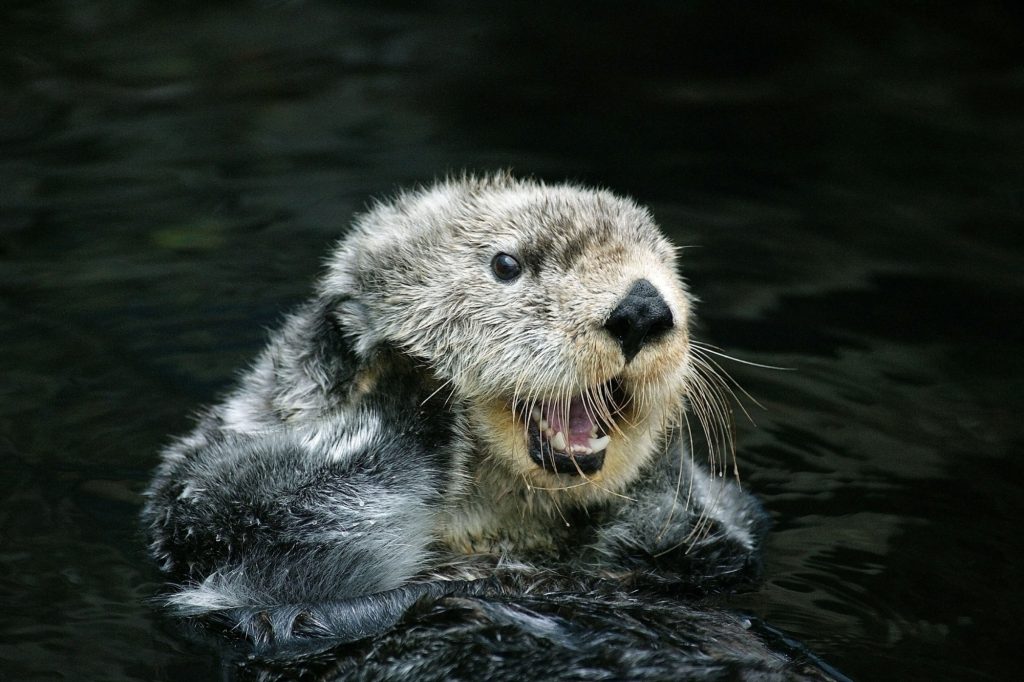
“Soft” doesn’t necessarily mean cuddly. In terms of animals, scientists measure softness in tiny hair widths & feather barbs, as well as how densely those hairs grow. Here are seven animals known for being the softest on Earth. Which one do you think is the cutest?
Featured Image Credit: Shutterstock.
Sea otter
Scientists counted the hair on sea otters and found that they can have up to 140,000 hairs in a single square centimeter. That’s denser than any other mammal we’ve ever studied. In fact, a sea otter’s underhairs are so fine at 7.6 to 11.9 microns across that water can’t touch their skin. One micron is around 0.00003937 inches, so those hairs are rather small.
Platypus
Yes, a platypus looks odd, but its coat is rather impressive. Each square millimeter carries 600 to 900 hairs & traps a layer of air that keeps it warm while it dives. That’s roughly 60,000 to 90,000 hairs per square centimeter. It’s quite important, as they need to stay underwater for long periods without losing body heat.
Vicuña
You probably haven’t heard of the vicuña. It’s a wild relative of the llama & it has fibers so fine they average only 12 to 13 microns wide. Interestingly, research has shown that these animals have incredible uniformity across herds in Peru & Chile, with each staple of fleece being about 31 mm long. This gives their fiber its smooth, almost silk-like look.
Musk ox
Beneath a musk ox’s shaggy coat, they have something called a qiviut, which is an underwool that insulates the animal against Arctic winters. Qiviut fibers are only 17.5–18.2 microns thick on average & researchers discovered that females usually have slightly finer samples than males. That’s quite different from their coarse guard hairs, which can be ten times as thick.
Angora rabbit
Breeders & textile researchers measured the fibers of the Angora rabbit and found that it’s usually between 12.4 and 14.1 microns. So what’s the secret to their softness? Well, the size is just as important as the structure because the down fibers have little to no medulla, which is the central core in hair. This makes the fur flexible & springy.
Cashmere goat
Cashmere goats produce an undercoat that’s between 15.6 and 19.5 microns in diameter. However, some breeds, especially in Inner Mongolia, can go as low as 13.8 microns. The sex & age can affect the hair’s diameter, and so can the climate. But the cashmere itself is hidden under a rougher outer coat. These animals shed it naturally each spring.
Common eider
In northern communities, eider ducks are famous for their down because it behaves differently from goose or duck down. Each barbule has tiny prongs that hook together & form clusters that cling without stitching. In fact, these clusters spring back into shape and insulate the eider evenly, so it’s no surprise it’s known as one of nature’s strongest soft materials.
The following sources were consulted in the preparation of this article:
- An Analysis of California Sea Otter (ENHYDRA LUTRIS) Pelage and Integument
- The sensory world of the platypus
- Fibre characteristics of vicuña (Vicugna vicugna mensalis)
- Fiber characteristics of qiviut and guard hair from wild muskoxen (Ovibos moschatus)
- Characteristics of Angora rabbit fiber using optical fiber diameter analyzer
- Effect of sex and rearing system on the quality and mineral content of fiber from raeini cashmere goats
- Contributions of feather microstructure to eider down insulation properties