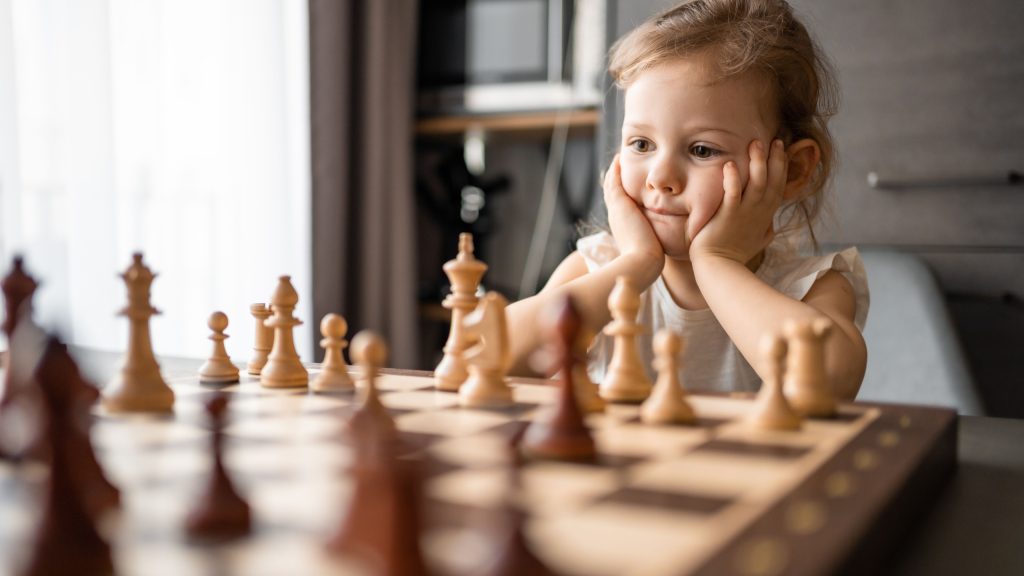
Some kids seem like they take forever to warm up to a hobby. Others go straight into the history books with it. Yes, a few child geniuses are able to change the world before they’ve even worked out how tall they’ll grow.
Here are ten child prodigies who made a lasting impact. Which small genius is your favorite?
Wolfgang Amadeus Mozart
Mozart spent a lot of his childhood days traveling around different courts. He’d play music for whoever would listen to him, including kings & queens, as well as ambassadors.
Mozart had begun composing short pieces by the age of five. In fact, he’d already finished a full opera for a theater once he was twelve, and he had a schedule busier than most kids today.
Carl Friedrich Gauss
Carl Friedrich Gauss was a math genius. He managed to solve the 1-to-100 addition problem in just a few seconds when he was still in primary school. That love for numbers never really left him.
During his early twenties, Gauss published a book about number theory called Disquisitiones Arithmeticae. It completely changed math.
Blaise Pascal
After watching his father deal with endless tax records, Blaise Pascal decided to take action. He designed a mechanical adding machine to help his father while Pascal was in his teens. The device was called the Pascaline.
It could do basic arithmetic using moving dials, and he created several working ones for officials who needed faster calculations.
John von Neumann
It shouldn’t be surprising that someone like John von Neumann was a child genius. He grew up reading many different languages for fun, and he also completed mental math activities that many adults were amazed by.
He also drew a draft design that later became the model for early computers. Neumann was a genius in every sense of the word.
Norbert Wiener
Norbert Wiener was a fantastic student. So much so that he actually finished high school when he was 11, and then he completed a math degree just a few years later.
He was a man capable of publishing serious academic work while he was young. Wiener combined ideas from engineering & biology in a new way. Today, we call his form of science “cybernetics.”
Terence Tao
You may not have heard of Terence Tao. But he was someone who took university courses before most kids are able to finish their multiplication tables.
He completed the International Mathematical Olympiad during his early teens. Tao won a bronze in the first year, a silver in the second, and finally a gold in the last. He completely changed how people thought about math.
Judit Polgár
Judit Polgár was a girl whose childhood was focused on chessboards & puzzles. No wonder she was a genius. Polgár earned the title of chess grandmaster when she was just fifteen, beating Bobby Fischer’s record.
That’s not all. Polgár was so talented that she would often play in mixed-level champion events, not just women-only games.
Shirley Temple
Not many people realize just how gifted Shirley Temple was. Her childhood fame led her to become the most bankable movie star in America & even carried major studio films during the Depression.
But she also had an IQ of 155. She also became the U.S. ambassador to two different countries due to her sheer skills.
Pablo Picasso
It was Pablo Picasso’s father who encouraged him to take up painting formally. He did so before most kids even think about art school.
Picasso made his first oil painting around the age of eight, and then he began showing a few of his pieces publicly once he was thirteen. Picasso’s works later changed art & galleries across the world.
Srinivasa Ramanujan
As a youngster, Srinivasa Ramanujan would read whatever math books he could find. He then began writing down formulas that he had thought up.
Ramanujan had filled many notebooks with different ideas by his teens, and he connected with Cambridge years later. They turned his notes into major papers that continue to change number theory & physics.
The following sources were consulted in the preparation of this article:
- Wolfgang Amadeus Mozart: the young genius
- The Story of Gauss
- Blaise Pascal creates the Pascaline, or Pascal’s calculator
- Von Neumann Privately Circulates the First Theoretical Description of a Stored-Program Computer: the von Neumann Architecture
- Norbert Wiener
- Terence Chi-Shen Tao
- Judit Polgar: Most inspiring women chess player ever
- Shirley Temple bio
- Picasso’s childhood
- Srinivasa Ramanujan (1887–1920): The Centenary of a Remarkable Mathematician