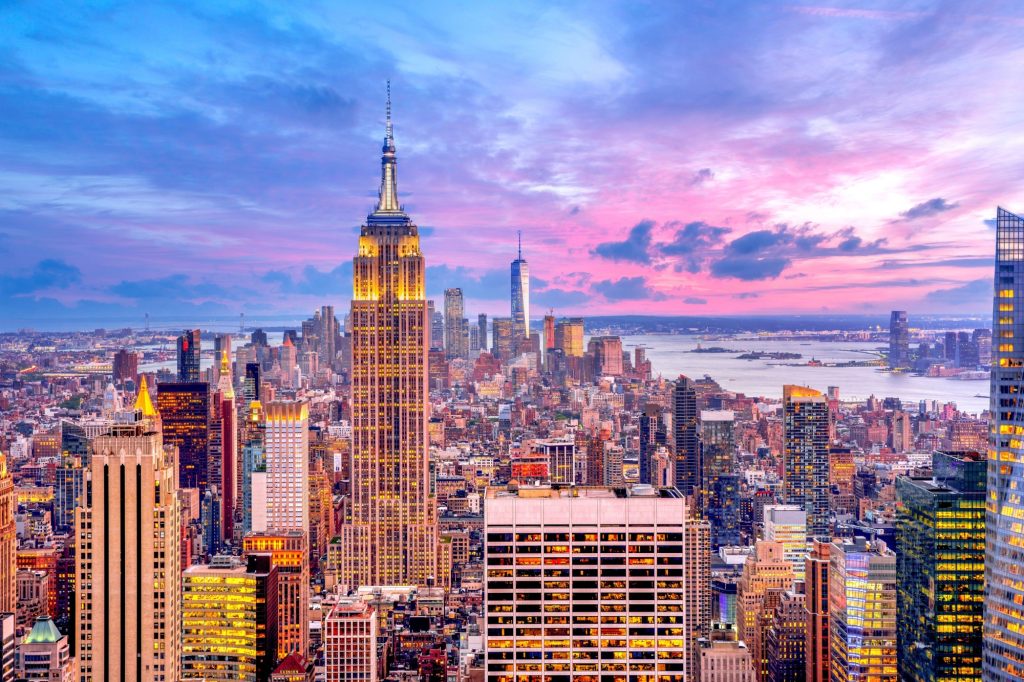
New Yorkers pass it every day. And yet hardly anyone knows what’s actually above the Empire State Building’s famous observatory, as there’s a lot more going on than the 102 floors you see on brochures.
Let’s find out about the hidden floors on this iconic American building.
Featured Image Credit: Shutterstock.
Key takeaways
Here’s what you’ll find out:
- The hidden floor above the observatory & who actually gets to see it
- Why the mast adds more floors than the public realizes
- What’s inside the spire that keeps it running
What “hidden floors” really means
When people say the Empire State Building has “secret” floors, they’re usually talking about the ones tucked up inside the spire. Technically, the building ends at the 102nd floor. But there’s a small area right above it. It’s an extra level used by maintenance crews & engineers. Sadly, most visitors never get to see it, even though it’s been there since the 1930s, because it’s entirely closed off to the public.
Where that extra level actually sits
It’s a short climb above the glassed-in 102nd-floor observatory to the 103rd floor. It’s tiny. The balcony up there wraps around the spire & has a waist-high railing, so it’s definitely not a tourist spot. Even celebrities or special guests who’ve visited that level need safety harnesses just to step outside. Do you really want to risk falling from somewhere as high up as this place?
The original plan
Interestingly, the whole top of the building wasn’t supposed to end with radio antennas. When it was first drawn up in 1930, the designers imagined blimps would dock right at the crown. They thought passengers could disembark straight into the skyscraper. However, it didn’t last long due to the updrafts & crosswinds.
How tall the mast really is
The crown is a 14-story steel mast stacked on top of the tower’s roof. While you can’t see the floors individually from outside, they’re built into the structure. They’re what give the building its unmistakable silhouette.
After the Empire State was completed in 1931, that mast helped it hit a total height of 1,250 feet and become the tallest building in the world at the time.
What’s hiding inside the spire
You won’t find marble or chandeliers inside the mast. It’s simply made of narrow service corridors & cables, which maintenance workers still use to check antennas & wiring. Sure, these areas aren’t for show. But they’re absolutely essential to keeping the building running.
Why the floor count seems confusing
Different records list the Empire State Building as having 102 floors. And that’s true for the main tower. The extra floor tucked into the mast isn’t counted in that number because it tends to be more of a service level than a regular story.
Yet adding those 14 mast levels on top means you could argue the building has well over a hundred floors.
How people move
The Empire State Building runs a huge elevator network with 73 cars in total. And they don’t all do the same job. Some move tourists to the observatories & others haul freight, while the rest handle office traffic.
The system’s changed a lot since 1931. The original 64 elevators were hand-operated, but modern ones run automatically and recycle energy when they slow down.
LED system & scheduling
The lights that cover the top of the building come from a computer-controlled LED setup that went live in 2012. Staff run everything from a control room with software that lets them plan light shows weeks ahead. They can change colors & dim sections in seconds. They’re even able to switch to a full pattern.
The following sources were consulted in the preparation of this article:
- Empire State Building (Individual Landmark) Designation Report
- National Register of Historic Places Registration Form: Empire State Building
- The Empire State Building: The Making of a Landmark
- Empire State Building Facts: All You Need to Know
- A “New” New York State of Mind: Empire State Building Redefines New York City Skyline With Philips LED Lighting