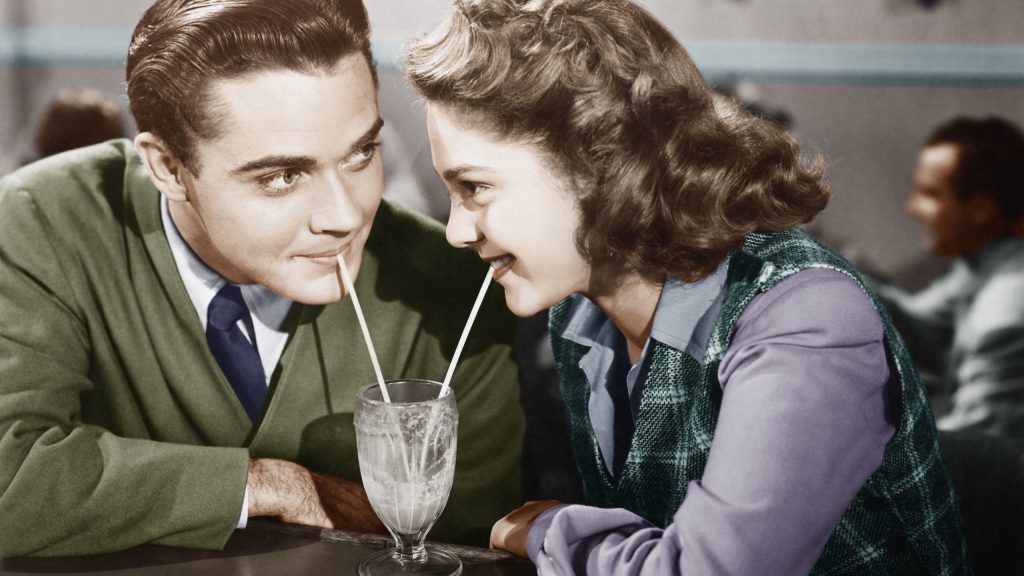
Dating in the 1950s was no easy feat. It was carefully monitored by the nosy neighbors, strict parents, and society in general. There were rules from beginning to end, from picking up the phone to the final goodnight. Let’s turn back the clock to what love looked like before the rise of texting, Netflix, and chill.
The boy had to call the house

When a boy wanted to talk to a girl, he couldn’t just text or give a ring. He had to call her house and usually her father answered the phone.
That meant that the boy was expected to introduce himself and sometimes answer embarrassing questions before the girl could even come to the phone. This was also a good chance for parents to decide if a boy was a good influence and respectable enough to take their daughter out.
The boy went to the girl’s door

A boy was expected to get out of his car and walk to the door to get his date. They didn’t just honk the horn like today and expected the girl to come out. In fact, honking was considered impolite and disrespectful to her parents.
The right way was to greet her mother and father and then escort her back to the car. This was another chance for parents to size him up and made the date feel more formal and respectful.
The boy always paid

Back then, the boy was supposed to pay for everything, even if the girl was very rich. So he paid for dinner, and things like movie tickets, soda shop snacks, and popcorn.
If a girl tried to offer money, it embarrassed him and even seemed like she was trying to steal his masculine role. Paying was a sign of his respect and his seriousness about the date.
Girls did not order for themselves

In the 1950s, women simply didn’t talk directly to a waiter. According to a dating article in Woman’s Own, girls were supposed to discreetly tell the man they wanted and then let him order for both of them.
That way, he maintained the position as a provider. Not ordering for oneself is something that strikes us as unusual today, but back then, that’s how it was done.
Drive-in movies were treated like romantic spaces

Drive-ins were the most popular date spot, but also the most monitored by parents. Parents knew exactly how much privacy a car in the dark provided two teenagers, so many allowed their children to go to a drive-in only if they were “going steady” already, or if it were a double date.
Everyone knew the reputation of drive-ins, which is partly why they became so iconic.
Kissing too soon was a big no-no

Back then, teen magazines advised girls over and over to not kiss a boy on the first date, or sometimes even the second. At least three dates were the usual time before a kiss.
A girl who kissed too soon risked serious judgment, as well as a stain on her reputation. This meant a lot of pressure on girls to appear “modest,” even if they really liked the boy.
Curfews were set in stone

Girls were expected to be home by a set hour each night, often 9 or 10 p.m. (the time would often depend on their age). A girl’s curfew was part of her good reputation and parents were careful to enforce it.
Being late, even by a few minutes, would lead to punishment. They may sometimes be grounded or even banned from seeing that boy. Boys also knew that bringing her home late was an easy way to not get a second date.
Dating wasn’t fun; it was serious business

Many girls were raised to believe that dating was not about having fun, but practice for becoming a wife. Dating advice books told them to be patient, be pleasant and supportive, and not to engage in arguments with boys.
In the 1950s, dating was a way to get ready to settle down. It was not something to do casually. But today, both men and women accept that dating doesn’t always lead to marriage.
The following sources were consulted in the preparation of this article: